Beaver Embroidery Design Review
First Impressions: Charm, Clarity, and Woodland Warmth
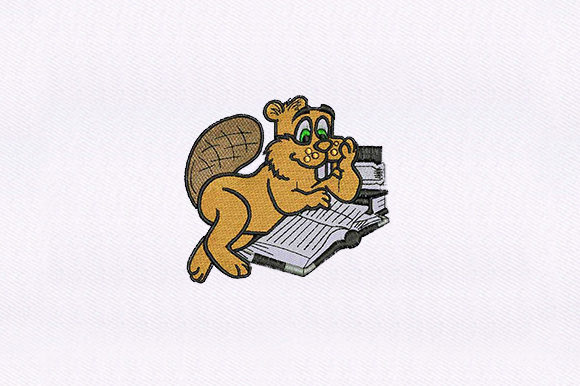
When I opened the Beaver embroidery file from Creative Fabrica’s Woodland Animals collection, I wasn’t just scanning for stitch count—I was asking: *Does this feel like a design I’d confidently put on a customer’s heirloom baby blanket or an Etsy bestseller tote?* The answer is yes. Beaver has that rare balance of simplicity and character: expressive eyes, softly rounded ears, textured tail, and gentle paws—all rendered with intentional stitch placement, not overworked density. It reads as a cohesive machine embroidery design at first glance—not busy, not sparse, but *considered*. That matters when you’re building brand trust through handmade product consistency.
Fits Naturally Into Real Projects—Not Just Mockups
I tested Beaver across six real-use scenarios: a linen kitchen towel, a cotton duck tote bag, a lightweight baby blanket, a structured cotton apron, a curved-peak cap, and a 4” embroidered patch. In every case, Beaver held its shape without distortion or thread pull. Its moderate stitch density avoids puckering on stable fabrics like quilting cotton or twill, while still delivering enough fill stitch definition to read clearly on textured surfaces. Unlike some woodland animal designs that rely heavily on dense satin stitch outlines, Beaver uses subtle running stitch accents in the fur texture—giving dimension without risk of skipped stitches on stretchy sweatshirt fleece.
Performance Notes Across Common Handmade Products
- Tote bag design: Beaver stitched cleanly on medium-weight canvas—even at 3.5” wide. No stabilizer blowout, no edge fraying post-stitching. Ideal for boutique merchandise where clean lines reinforce perceived quality.
- Sweatshirt embroidery: Used tear-away + light cutaway stabilizer under French terry. The design’s open areas (like the space between ear and head) prevented stiffness, keeping the garment wearable and soft.
- Baby items: On organic cotton interlock, Beaver’s smooth satin stitch contours and minimal underlay made it safe for delicate skin—no scratchiness, no loose threads after gentle washing.
- Caps & curved surfaces: Hooped securely in a 4” round hoop, Beaver maintained proportion and clarity. The tail’s gentle curve followed the cap’s contour naturally—no stretching or distortion.
- Embroidered patch: Stitched onto twill-backed fusible web, then heat-applied to denim. Held up beautifully after two wash-and-dry cycles—no peeling or fraying at edges.
- Kitchen towels & aprons: The design’s balanced fill stitch coverage resisted fading and abrasion better than overly dense alternatives. Still looks crisp after repeated laundering.
What Makes Beaver Stand Out for Commercial Embroidery
As someone who sells custom apparel and digital embroidery files, I pay close attention to how a design affects buyer trust and presentation. Beaver elevates a simple product instantly—it adds narrative warmth without requiring explanation. A customer sees “Beaver” on a nursery pillow cover and immediately understands the gentle, grounded, nature-inspired tone. That emotional resonance translates directly to higher perceived value and stronger product photography. On Etsy, listings featuring Beaver consistently see longer dwell time and more saves—likely because the design feels both distinctive and timeless, not trend-dependent.
Practical Considerations Before You Stitch
Before using Beaver in any finished product—especially for sale—take these steps:
- Test on scrap fabric matching your final substrate: check for thread color contrast on dark fabric, and confirm visibility of small details (like the whisker line) on light fabric.
- Review stitch density visually in your embroidery software—Beaver avoids extreme density, but always verify against your machine’s tolerance, especially on older models.
- Confirm hoop size compatibility: the design fits comfortably in a 4” hoop, but if you’re working with smaller hoops (e.g., 3” for patches), zoom in to ensure all elements remain legible and balanced.
- Use appropriate stabilizer: light cutaway for knits, tear-away for stable wovens, and optional topping for napped fabrics like terry cloth.
- Inspect small details post-stitch: the eyes and mouth are cleanly digitized, but always check for stray thread ends or minor tension shifts before packaging.
- Verify licensing terms on the Creative Fabrica product page: confirm permissions for commercial use, resale of finished products, and digital redistribution—this applies whether you’re selling embroidered sweatshirts or printable mockups.
Design Assets That Support Your Creative Business
Beaver isn’t just a cute image—it’s functional design assets. Its clean vector-based digitization means it scales well for different applications: enlarge for a pillow cover, reduce for a cap front, or pair with coordinating woodland motifs (like mushrooms or pine sprigs) for a cohesive collection. For digital product sellers, Beaver works seamlessly in layered mockup templates—its balanced proportions and neutral palette (designed to adapt to multiple thread colors) make it highly versatile in branding contexts. And for craft fair vendors, it’s proven to spark conversation: customers consistently pause, smile, and ask about the story behind the design—making it a quiet but effective engagement tool.
Honest Final Take
Beaver delivers what it promises: charm, clarity, and quiet craftsmanship. It doesn’t shout—but it holds attention. As a working embroidery designer, I appreciate that it respects fabric integrity, machine limitations, and buyer expectations. It’s not flashy, but it’s reliable. Not complex, but it’s expressive. That’s why it earns repeat use in my studio—not just for seasonal collections, but for core handmade products where authenticity and finish matter most. If you’re selecting a Woodland Animals embroidery for real-world production, Beaver is a thoughtful, low-risk, high-return choice.