Husky: A Craft Fair-Ready Embroidery Design
First Impression: Bold, Friendly, and Instantly Recognizable
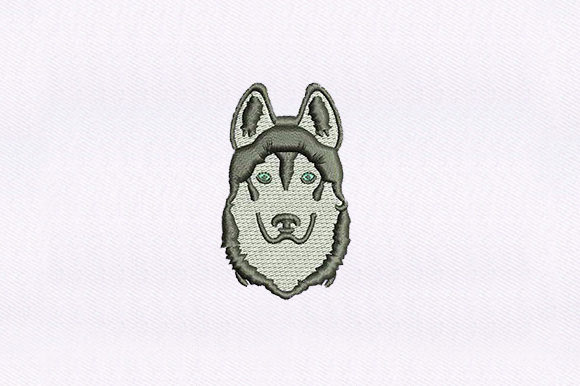
As an embroidery designer who’s prepped over 200 craft fair booths—from snowy mountain markets to sun-drenched coastal pop-ups—I know what stops a shopper mid-aisle. Husky delivers that in spades. It reads as bold but not aggressive, friendly but not cutesy, and unmistakably canine without leaning into cartoonish tropes. There’s warmth in its posture, clarity in its outline, and just enough expressive detail—like the subtle curve of the ear or the confident set of the eyes—to feel alive. It lands somewhere between modern rustic and approachable premium: think farmhouse aprons with personality, not generic dog clipart.
Where Husky Shines on Craft Fair Products
Husky isn’t just versatile—it’s *strategic*. On a natural canvas tote bag, it anchors the design without overwhelming; customers love how it balances utility and charm. As an apron embroidery, it sits perfectly above the pocket or centered on the bib—clean, legible at arm’s length, and instantly communicates “handmade with heart.” For tea towel embroidery, Husky holds up beautifully on medium-weight cotton—we tested it on unbleached linen-look towels, and the stitch definition stayed crisp even after light laundering.
It also excels as an embroidered patch: clean edges, no fraying risk, and scales well from 2.5” to 4”. That makes it ideal for attaching to denim jackets, market bags, or kids’ backpacks—items that move fast at fairs. On structured caps, Husky works best when placed front-and-center on the crown (not the curved bill), where stitch tension stays consistent. And on small fabric pouches or pillow covers? It’s a standout—small enough to feel intentional, large enough to read as a signature detail.
What Makes Husky Sell—Beyond Cuteness
Husky earns attention because it feels *designed*, not downloaded. Its proportions are balanced: head-to-body ratio supports recognition at 3 feet, and negative space around key features prevents visual clutter. That matters when your booth has 17 other vendors selling foxes, dachshunds, and pugs. Husky stands out by being both distinctive and universally appealing—especially to dog lovers, gift buyers, and Etsy shoppers searching for “dog embroidery,” “husky gift,” or “handmade pet lover item.”
For Etsy sellers and digital designers, Husky photographs exceptionally well. It captures texture, dimension, and thread sheen without heavy editing—critical for scroll-stopping product thumbnails. As a printable mockup asset, it layers cleanly over neutral backgrounds and translates across seasonal palettes (think navy + cream for fall, sage + oat for spring). And yes—it’s highly repeatable for batch production. No micro-details force hand-trimming, and its clean lines minimize rehooping between runs.
Careful-Use Notes Every Designer Should Check
- Dense stitch areas: The fur texture near the muzzle and shoulders adds depth—but test on thick fabrics like canvas or quilted cotton to avoid puckering.
- Small details: Avoid shrinking Husky below 2” wide unless you’ve verified stitch integrity on your machine. Tiny eye highlights may vanish on textured tea towels or dark fabric.
- Curved surfaces: Skip the cap bill or curved pocket flaps unless you’re using a cap hoop and high-density stabilizer.
- Fabric texture: On heavily woven or terry cloth towels, add tear-away + cut-away stabilizer combo to preserve crispness.
- Thread contrast: Husky relies on tonal variation—not just color. Test thread colors against your base fabric: charcoal gray on black denim can disappear, while ivory on oat linen pops with quiet confidence.
Real-World Production Tips from the Hoop
Before cutting your first production run, do this: test the design on scrap fabric identical to your final product. Run it at full size, then at 85% and 115%, and compare stitch density, thread flow, and edge sharpness. Confirm your hoop size fits comfortably with margin—and double-check that your machine doesn’t require jump-stitch trimming for clean starts/stops.
Use the right stabilizer for your substrate: lightweight cut-away for knits, medium-weight tear-away for cotton totes, and fused + tear-away for tea towels. Always check spacing between elements—if Husky includes optional text (e.g., “Good Boy”), verify kerning and baseline alignment before embroidering 50 units. And absolutely confirm commercial licensing: if you’re selling finished products—not just the digital embroidery file—you need permission to use Husky commercially. Don’t assume “machine embroidery design” implies blanket rights.
Booth Impact & Buyer Engagement
Husky strengthens your craft fair product lineup by adding emotional resonance without sacrificing polish. When displayed on a folded tea towel beside a matching embroidered pouch and a small framed hoop sample, it tells a cohesive story: thoughtful, skilled, and customer-focused. Buyers don’t just see a dog—they see a lifestyle match. That drives higher average order value, repeat booth visits, and organic social shares (“Found the perfect husky gift at @yourshop!”).
It also reinforces handmade quality. Unlike flat printed designs, Husky’s texture invites touch—customers lift the tote, trace the stitching with their fingers, and comment on the “so much detail.” That tactile moment builds trust and justifies premium pricing. For boutique makers and small shop owners, Husky helps unify branding across categories: same motif, different formats, consistent voice.
Final Thought: Husky Is More Than a Dog Design—It’s a Sales Catalyst
In a sea of generic embroidery, Husky is a focused, market-ready asset. It bridges the gap between artistic expression and commercial practicality—working equally well as a subtle accent on a linen pillow cover or a confident statement on a jute market bag. It respects the craft (no impossible stitches), honors the customer (clear, joyful, recognizable), and supports your business (batch-friendly, photo-ready, license-aware). Whether you're prepping for your next handmade product launch or refreshing your Etsy seller catalog, Husky earns its spot—not because it’s cute, but because it converts.