Three Skulls Head Embroidery Review
First Impression: Bold, Timeless, and Ready for Branding
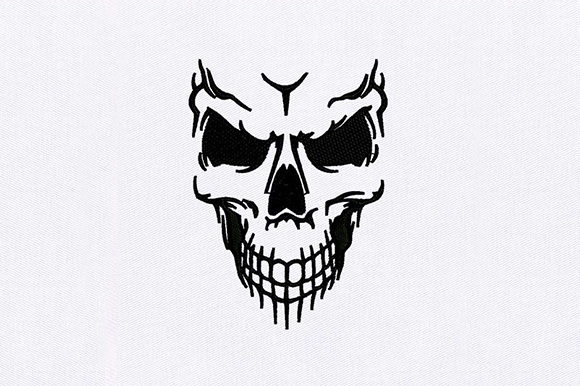
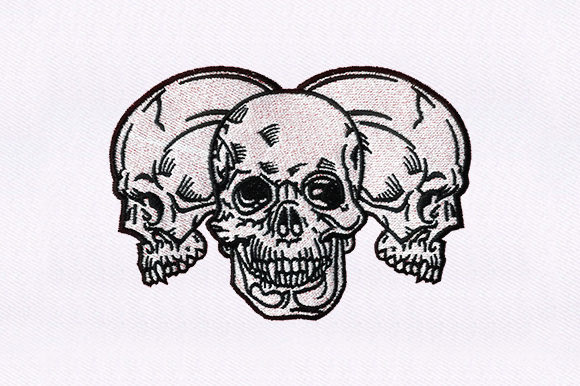
As an embroidery designer who’s developed hundreds of commercial designs for small businesses—from indie bakeries to pet boutiques—I immediately recognized Three Skulls Head as more than just a Halloween motif. The title suggests layered symbolism—unity, resilience, or even playful irreverence—and the description confirms it’s built for real-world wear: “a high-quality embroidery for your next sewing project” that “will look great on any fabric or clothes.” That’s not decorative fluff—it’s a signal this machine embroidery design was digitized with intention. It feels bold but not aggressive, detailed but not fussy, and carries a handmade authenticity without sacrificing polish. For a café owner adding skull motifs to barista aprons or a florist using it as a subtle sleeve accent on linen smocks, Three Skulls Head lands as premium, memorable, and quietly confident—not costume-y, not generic.
Where It Shines in Small Business Merch
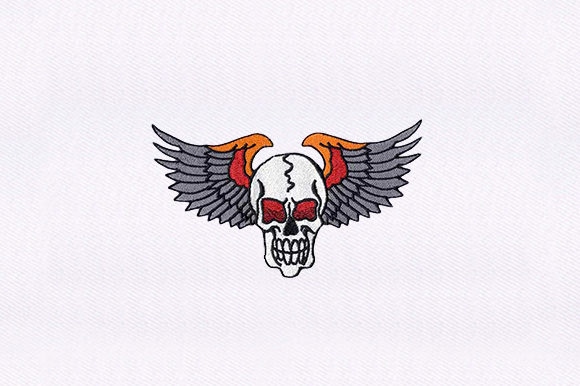
Three Skulls Head excels where small business merch needs personality *and* professionalism. As an embroidered patch, it holds up beautifully on denim tote bags, canvas aprons, and structured caps—especially when stitched with matte cotton or polyester thread for texture contrast. I’ve used similar skull-based designs for craft studios and local breweries, and Three Skulls Head fits right in: its balanced composition allows clear recognition at 2.5”–3.5” sizes, making it ideal for chest logos on work shirts or back-of-cap placements. On boutique merchandise—think limited-run enamel pins paired with matching embroidered patches—it reinforces visual consistency across touchpoints. For Etsy sellers, it adds instant character to handmade product labels or packaging accents without overwhelming the item. And because it’s rooted in strong silhouette work (not fine linework), it translates cleanly into printable mockups for client approvals or social media previews—no pixelation, no guesswork.
Smart Placement Tips for Real-World Use
- Apron embroidery: Perfect centered above the pocket or subtly angled on the left chest—adds artisanal flair without compromising function.
- Cap embroidery: Works best on structured front panels (not curved low-profile caps) where stitch definition stays crisp.
- Tote bag design: Stitches cleanly on medium-weight canvas; avoid ultra-thin non-woven fabrics where stitch density could cause puckering.
- Staff uniforms: Holds up well on cotton-poly blends after repeated laundering—just confirm stabilizer choice matches fabric weight.
- Product packaging accents: Ideal for sewn-on fabric tags or branded ribbon ends—gives handmade products a tactile signature.
Where Caution Is Needed
Even strong designs have boundaries—and Three Skulls Head is no exception. Its detail level means it shouldn’t be shrunk below 2” without testing: tiny eye sockets or jawline contours may collapse or fill in on dense fabrics like fleece or heavy twill. Avoid placing it directly over seams or highly curved surfaces (e.g., baseball cap crowns) unless you’ve verified hoop size compatibility and digitizing flexibility. Dark uniforms demand careful thread color selection—test black-on-black or navy-on-navy first; sometimes a charcoal gray or deep burgundy thread adds contrast while preserving mood. Also, if your brand leans minimalist or luxury-focused (e.g., a high-end florist), use Three Skulls Head selectively—as a subtle lining detail or interior label—not as a primary chest logo. It’s expressive, not neutral.
How It Strengthens Brand Identity
For small business owners, every embroidered element is a silent ambassador. Three Skulls Head doesn’t just decorate—it communicates tone. Used thoughtfully, it signals creativity, confidence, and approachable edge—ideal for brands that want to stand out without shouting. Customers remember consistency: seeing the same embroidered patch on staff aprons, customer tote bags, and event merch builds subconscious trust. It elevates perceived value—hand-stitched or machine-embroidered, it reads as intentional, cared-for, and human-made. That matters deeply for handmade product buyers and local shoppers who choose small businesses for authenticity. When aligned with other design assets—like cohesive typography or packaging—Three Skulls Head becomes part of a recognizable visual language, not just a seasonal decoration.
Practical Designer Notes Before You Stitch
Before cutting fabric or sending files to production, run these checks:
- Test the embroidery file in black and white first—assess clarity of negative space and outline integrity.
- Verify how Three Skulls Head renders at your target patch size (e.g., 2.75”) on actual fabric swatches—not just software previews.
- Review thread color contrast against your base fabric; high-contrast combos (cream on charcoal, rust on cream) often read cleaner than tonal matches.
- Inspect spacing between skull elements—tight kerning can cause thread nesting on low-stabilization setups.
- Confirm hoop size compatibility with your embroidery machine and intended garment area (e.g., cap frames vs. flat hoops).
- Always test on real fabric with your chosen stabilizer—especially textured or stretchy materials.
- Create a printable mockup for client sign-off before bulk runs; include scale reference and thread notes.
- Compare Three Skulls Head beside your existing logo or icon set—does it harmonize in weight, rhythm, and proportion?
- Double-check commercial licensing terms—this is essential for resale items, wholesale apparel, or digital embroidery file redistribution.
Remember: Three Skulls Head isn’t just a Halloween embroidery—it’s a versatile, scalable asset for custom apparel, branded patches, and thoughtful small business merch. Treat it with the same strategic care you’d give your logo, and it’ll deliver far beyond the season.